
Battery Chargers: Understanding Modern Technology – John’s Tech Blog
Most of us don’t give a second thought to batteries beyond realizing there aren’t enough of them in the junk drawer when you need some.
Battery technology has come a long way over the years and is still improving. Sadly, our understanding of them on a user level has not improved.
I have one funny battery story from my working years.
I was a Tech Rep that supported the USMC in Expeditionary Airfields. Those talented Marines could build a runway, taxiways, and parking ramps with sheets of aluminum matting that fit together like puzzle pieces.
Additionally, they would build Landing Zones or what they called VTOL pads in austere locations. Sometimes they would light those surfaces with a portable or battery powered system.
Every time I saw that ridiculously hard work I would remind myself and all others around me that I was grateful that I took electronics in school.
I was once invited to an engineering meeting at NAVAIR Lakehurst regarding development of a new landing light system for the above mentioned landing surfaces.
The Engineer in charge stood in front of a whiteboard and asked the Marines what they wanted.
Unobtanium
Quite frankly some of the requests stymied me. They wanted light, cheap batteries that lasted basically forever. When I very nicely tried to point out that the technology they were asking for did not exist, and would not exist for many, many years one Warrant Officer asked me to be quiet and that it was THEIR dream list.
I grinned and laughed to myself realizing that he knew nothing about batteries at all and that I wasn’t the one who needed to be quiet.
What they ended up getting was a light system powered by CR123A batteries. They were fairly awesome, right up to the point when they figured out CR123A batteries were not common in foreign lands and they couldn’t maintain the systems in those deployed environments. Whoops!. Heck, imagine being in any city in the US and running to the store for 200 CR123A batteries. Good luck with that.
Even funnier is there was one especially despicable clown of a Chief Warrant Officer. Guy hated me bad. Then one day he acts like he was my best friend and told me they were just throwing these lights away and I could have as many as I wanted. Boy did I know where that was headed. Commence Operation Set Up The Civilian. Hard pass, dumbass.
More Advanced Test Equipment And Software
Who needs more advanced battery testing equipment?
- Off Grid Solar enthusiasts
- Electronics Enthusiasts
- Flashlight Geeks
- Auto and Powersports mechanics and enthusiasts
- Radio Control (RC) hobbyists
- Technical Reviewers (That’s me!)
- And others that I probably can’t think of at the moment
Test Equipment Examples – Hardware
If you google up “best battery testers for NiMH or Li-Ion you’ll see a few names pop up regularly.
- XTAR VP4L – The L stands for Longer batteries such as the 21700
- FNIRSI HRM-10 – Test only battery voltage and internal resistance
- ZKETech EBC-A20 – Only for Lithium Chemistry or Lead Acid Batteries
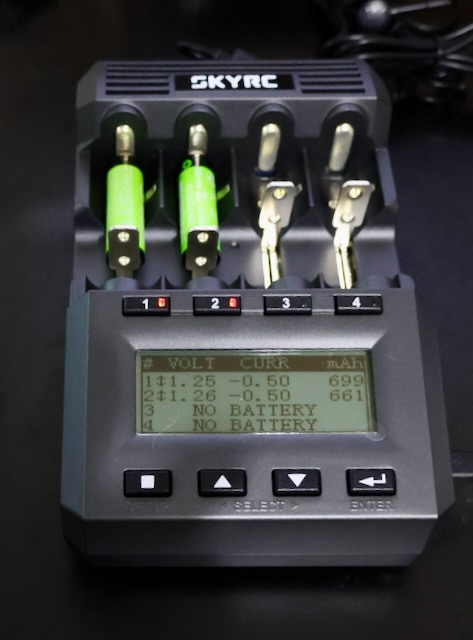
- SkyRC MC3000 – 4 Bay charger that supports longer batteries and most chemistries
These are the ones that I own and use for reviewing batteries. I don’t have a favorite as they all are pretty great. By far the easiest one to use is the XTAR VP4L. Just pop a battery in and it starts. No software needed.
The FNIRSI HRM-10 is pretty great but the plastic sled that holds your battery is crap and breaks easily. I recommend saving the cable from a broken one and adding a ZKETech Battery Rack.
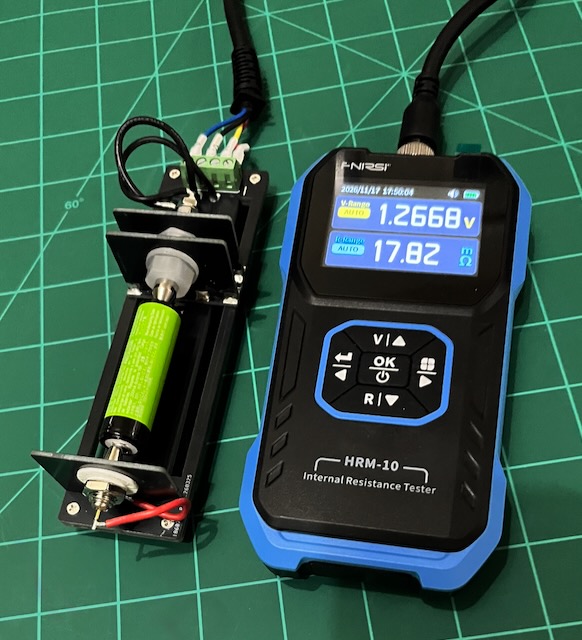
It also has the advantage of accommodating longer batteries such as the popular 21700 flashlight battery. Anyway, that’s what we use over here for battery testing.
Test Equipment – Software
Here is where it gets interesting. I have found most of the software to be in a category I have named, “Adequate But Lacking”. And again, I’d be remiss in not mentioning that the XTAR VP4L requires no software. This might be as far as you need to read if you are looking for a home charger/tester that just plain old works. Also, there is no software for the FNIRSI HRM-10. Even though the HRM-10 is limited to voltage and internal resistance measurements I find that a combination of the two testers makes for the easiest workflow. The XTAR VP4L can do it all but you have to dig out the cables and it doesn’t have that fancy elegant holder like the FNIRSI does.
SkyRC MC3000 Software
MC3000_Monitor can be downloaded from here. Their software however is Windows only.
A developer on Github has a repository called MC3000-GUI which is super cool and it was a Linux build. I installed it on a Raspberry Pi 5 and then noticed a couple things that weren’t working correctly. Because it is Open Source I was able to have ChatGPT fix the things that I noticed and I even ported the software to MacOS arm64 in addition to the Linux build (.deb).
There were just a couple of weird behaviors. One still has me wondering if I did the right thing or not. It was displaying discharge current as a positive integer. In my mind it should be negative. Maybe I’m wrong, I dunno. But that’s the way I wanted it.
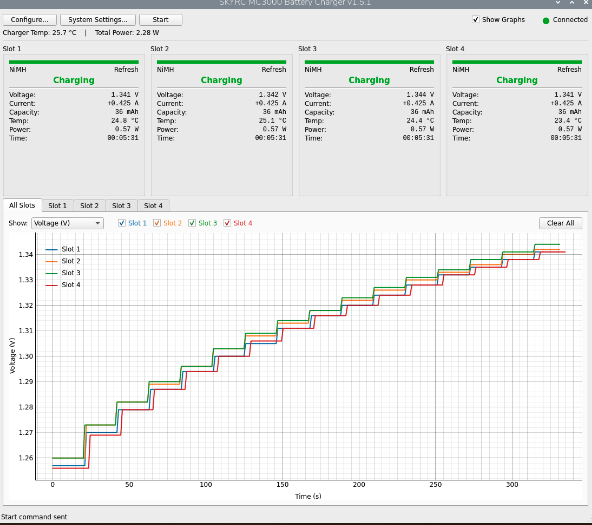
I am super happy with how this turned out and may share my fork of this project in the near future on Github. This software is best for profile management. You can use the pre-loaded ones or make your own and save them. And you can apply different profiles to each slot if you are working with a mix of different batteries.
Another issue was that you could set up a battery profile for a slot and then copy it to the other slots, albeit one at a time. I had a Copy To All Slots added. If you click the newly added “Apply Same to All” button it will now do everything with a single click.
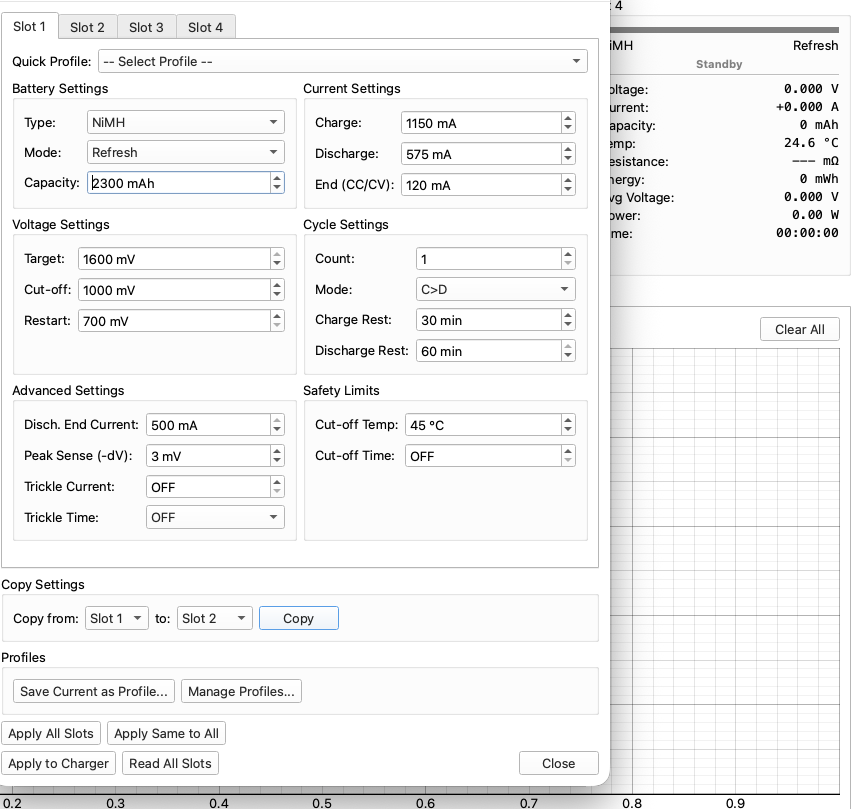
Before I would hit Apply to Charger and it would ONLY send whatever slot you were working on. This left me perplexed and once I noticed I was charging Slot 1 correctly but slots 2,3 and 4 were using a much higher capacity and voltage profile for the batteries that were installed.
Anyway, It got cleaned up a bit. Then I ported it to MacOS arm64. That I think was the coolest thing I (and more accurate to say, ChatGPT) accomplished.
MC3000 IOS App
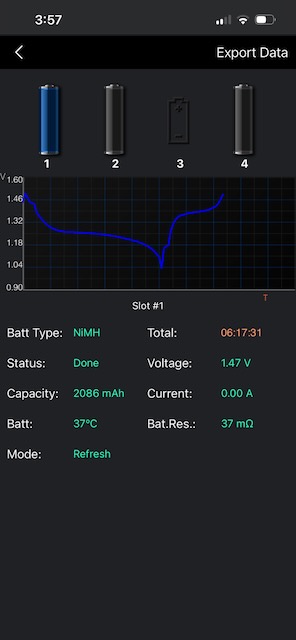
I do have to admit that the SkyRC IOS software is awesome although it is Bluetooth only and I have had a time or two where the Bluetooth connection would crap out.
The charger kept working fine just you couldn’t track what was going on. Most of the time it just worked, though.
This is probably more than enough for most people.
I didn’t really explore the Windows software much because by and large I hate Windows.
EBC-A20 Software
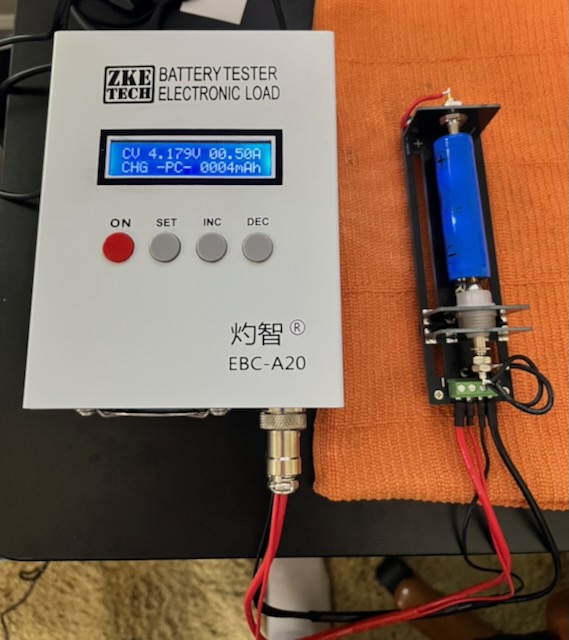
This is the fun one. If you go to the ZKETech Official website download page (I’m not linking it here) and download their windows software it will pop positive for a Trojan. Now I know that lots of files have false positives and the claims are that this is indeed a false positive.
But quite honestly you can’t convince me of that. There is no shortage of security sites to upload files to for scanning. I really only trust Kaspersky, Bit Defender, and Malwarebytes. All three of them called it a Trojan.
You can’t get me to definitively say it is or isn’t infected but you can get me to say there is no chance on earth that I will install this program on any computer on my network to include virtual machines.
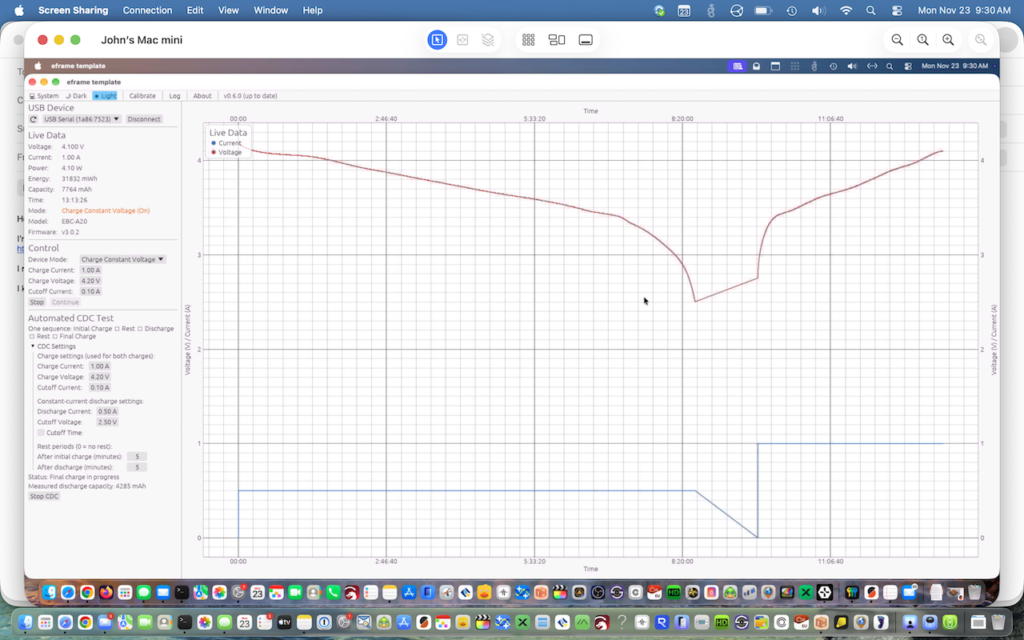
Back to Github. I found this repository called ebc-battery-tester. I spent 2-3 days with ChatGPT working through this one to tweak it to my satisfaction. I really only had one beef with this software. You could charge, or you could discharge. I had ChatGPT set up an automated Charge > Rest > Discharge > Rest > Final Charge routine. Here is the graph of my last automated action. Easy like Sunday Morning. The reason there wasn’t much initial charge activity is that these batteries had just previously been charged.
What Will I Do With All These Testers?
I hope to use these to improve my battery reviews. I have some batteries inbound with a tester and I will use some of this equipment possibly to do some comparative tests.
On a personal level and as a home owner here is how I intend to use them:
- XTAR VP4L – I’ll use this to charge my batteries that are in use and needs topped off. A button push allows you to apply a charging current of 2.0 Amps in slots 1 and 4 provided no batteries are in slots 2 and 3. Need some big batteries topped off quick? This is your Huckleberry.
- FNIRSI HRM-10 – Once the batteries come out of the XTAR VP4L I’ll test them for voltage and internal resistance. The XTAR VP4L can do both those tests, however the HRM-10 can do them super fast in their battery holder. Insert battery, turn on and receive a nearly instant reading.
- SkyRC MC3000 – This will be for testing and conditioning of batteries that I suspect are old and need to be given one more shot at staying out of the trash. Also the data is ideal for making compelling graphs to show battery capabilities or lack of capabilities.
- ZKETech EBC-A20 – Will use this to test and charge my large solar batteries or my smaller lead acid batteries such as are on my Westinghouse gas generator.
My Recommended Tester/Charger
Hands down it would be an offering from XTAR. My VP4L is reliable and despite its humble look it can do the heavy lifting that other advanced and way more expensive machines do. I would also recommend a charger of theirs such as the XTAR VX4 V2.
If you poke around the SkyRC website you will see that they have an MC5000. The principal difference between the MC3000 and MC5000 is that the MC5000 has a fresh updated look. Also the PC connectivity is gone. You can still receive and review data only you’ll be doing it on a smart phone app. The MC3000 can do both. In my opinion the MC3000 is the better choice for guys like me. Give me more features. Not less.
Wrap Up
Red light, green light is no way to maintain your batteries in an optimum condition. I have LOTS of rechargeable batteries. If chaos ever ensues I want to hear about it on my transistor radio and I want to photograph it with a camera that uses AA batteries. Alkaline batteries, once dead are headed for the landfill. If you are in a power outage situation you can sustain yourself a lot longer with rechargeable batteries. And that is provided you have a way to recharge them. I have a small solar system with an inverter and can keep things charged up.